
Introduction
Stand next to a running pipeline. Not a small one a proper industrial line. You will hear the flow before you even see it. Liquid moving, pressure building, sometimes vibration through the pipe wall. Everything looks steady from outside, but that flow is not left uncontrolled.
Somewhere along that line, there is always a control point. A place where flow can be stopped, slowed, or allowed through.
That control point is usually a valve.
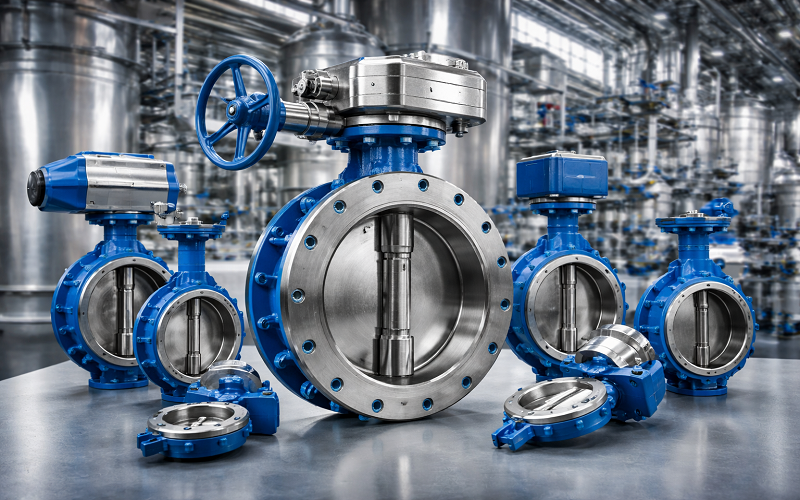
And in a lot of cases, it turns out to be a butterfly valve. Not because it is the most advanced design out there. It isn’t. But it does the job without making things complicated. A disc rotates, flow changes. Simple movement, direct result.
This is the space where butterfly valve manufacturers operate. Quiet work. No noise around it. But their products sit inside systems where nothing can go wrong for long.
Different industries use these valves for different reasons. The reasons change, but the outcome stays the same control without over complication.
Water Systems Simple Flow, Constant Need
Water lines look easy on paper. Just move water from one place to another.
In reality, it is not that clean.
Flow has to be controlled. Sections get isolated. Maintenance happens. Pressure changes depending on demand.
In big pipelines, the valve cannot be something heavy and slow. It has to respond quickly.
That is where butterfly valves come in.
Quarter turn. Open or shut. No long travel, no waiting.
In large diameter pipes, this matters more. Handling becomes easier, operation faster.
Because of that, a lot of water systems depend on what comes out of butterfly valve manufacturers. Not for complexity. For practicality.
Wastewater Where Conditions Get Rough
Now change the fluid. Not clean water anymore.
Wastewater carries particles, sludge, and sometimes chemical residue. Flow is uneven, sometimes aggressive.
Valves in this line take damage over time. So the design must not be fragile.
Butterfly valves hold up here because they are not crowded internally. Less obstruction, less chance of buildup blocking movement.
Operators in treatment plants don’t want delicate equipment. They want something that keeps working even when conditions are not ideal.
That is why this sector keeps pulling supply from butterfly valve manufacturers without much noise about it.
Chemical Lines Less Margin for Error
Move into a chemical plant and everything becomes tighter.
Flow is not just movement. It is part of a reaction, part of a process. One mistake and it affects the entire system.
Valves here are chosen carefully.
Butterfly valves get used in sections where flow control needs to be quick and straightforward. Not for every situation, but enough to matter.
Material becomes the real issue. Regular metal may not survive long. Corrosion, reaction, temperature all come into play.
So when these valves are supplied, butterfly valve manufacturers are not just thinking about size. They are thinking about what the valve will face once installed.
HVAC Hidden but Always Running
Inside large buildings, there is another network running quietly.
Cooling systems, heating lines, air circulation all controlled through pipes and ducts hidden behind walls.
Valves exist there too.
Butterfly valves are common because they do not take much space. They fit into tight mechanical rooms without creating problems.
Maintenance teams also prefer them. Easy to open, easy to shut, no complicated mechanism.
So even though people never see them, buildings still rely on products from butterfly valve manufacturers every day.
Oil and Gas Pressure and Control
Oil and gas lines are not forgiving.
Flow moves under pressure. Stopping it suddenly or redirecting it must be done carefully.
Butterfly valves are used where quick action is required. Not everywhere, but in sections where simple shut-off works.
The environment is tougher here. Pressure variations, exposure to different substances.
So the valve cannot be basic in build, even if the design looks simple.
This is where experienced butterfly valve manufacturers matter. The valve has to perform without hesitation.
Power Plants Continuous Operation
Power plants run almost non-stop. Systems inside cannot afford unnecessary shutdowns.
Water lines, cooling systems, support pipelines all depend on steady flow.
Butterfly valves are placed in these systems because they are reliable enough without being complicated.
Maintenance teams don’t want extra work. If a valve needs to be operated or replaced, it should not slow everything down.
That is why these valves keep appearing in power setups, supplied again through butterfly valve manufacturers.
Food Processing Cleaner Requirements
Some industries focus less on pressure and more on cleanliness.
Food and liquid processing lines need equipment that does not trap residue. Easy cleaning becomes important.
Butterfly valves are useful here because of their open design. Less surface area for buildup, easier to maintain.
Special versions are used, built with smoother finishes and proper sealing.
So even in cleaner industries, butterfly valve manufacturers have a place, just with different requirements.
Marine Systems Space and Corrosion
Inside ships, everything is packed tightly.
Pipes run close to each other. Systems overlap. There is no extra room for bulky components.
Butterfly valves fit because they are compact.
But marine conditions add another layer corrosion. Saltwater exposure changes everything.
So valves used here must be built differently. Materials, coatings, sealing all adjusted for the environment.
This again depends on how butterfly valve manufacturers design for these conditions.
Why These Valves Keep Staying in Use
There is no complicated reason behind it.
They are simple.
They are easy to operate.
They don’t take much space.
That combination keeps them relevant.
In many systems, that is enough.
Other valves exist, yes. Some more precise, some stronger for extreme conditions. But for general control, butterfly valves keep doing the job without adding extra weight or complexity.
That is why industries keep coming back to what butterfly valve manufacturers supply.
Final Thoughts
Most people don’t notice valves unless something goes wrong.
But inside every pipeline, they decide what moves and what stops. That is not a small role.
Butterfly valves do that quietly. No complex motion. No unnecessary parts. Just a simple rotation that changes flow.
Across industries water, chemicals, power, buildings, ships they sit there, doing the same job again and again.
And behind that, butterfly valve manufacturers keep supplying these components, making sure they fit into systems without creating new problems.
Nothing dramatic. Just steady work that keeps things moving.
FAQs
- Why do industries prefer butterfly valves?
Because they are simple to operate, compact, and suitable for large pipelines without making the system heavy.
- Are butterfly valves suitable for wastewater?
Yes. Their design allows them to handle fluids with particles better than many complex valves.
- Can they be used in chemical applications?
They can, but the material must match the chemical environment to avoid corrosion.
- Are butterfly valves used in buildings?
Yes. HVAC systems use them to control water and air flow.
- Do they require a lot of maintenance?
Not much compared to complex valves, but regular inspection is still necessary.
- Why are they common in marine systems?
Because they are compact and can be designed to resist corrosion in harsh environments.